جميع المنتجات
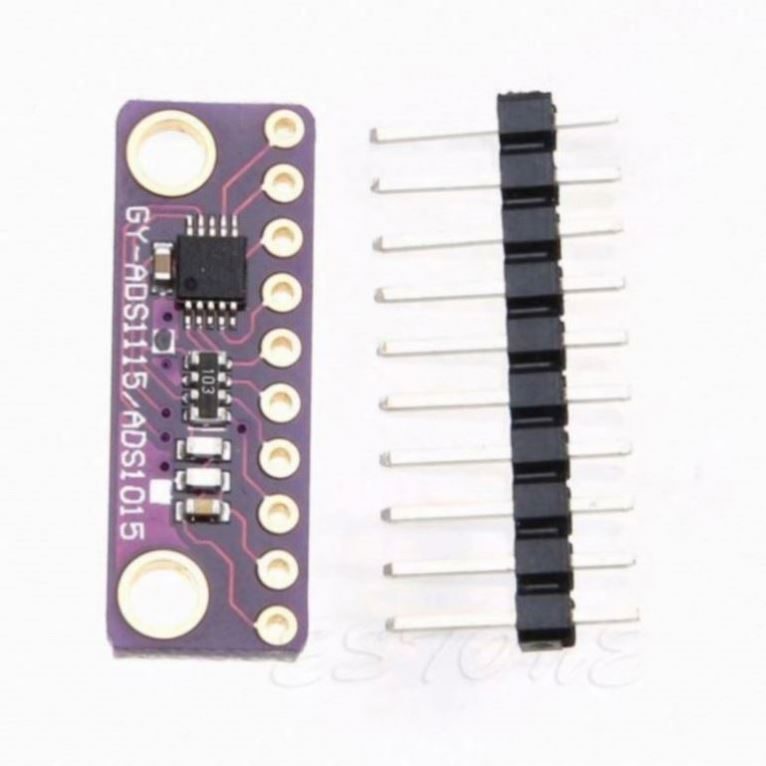
ADS1115 16-Bit ADC 4-Channel I2C Module (Black)
ADS1115 16-Bit ADC 4-Channel I2C Module (Black). ADS1115 16-Bit ADC Module — 4 Channel, I2C. اطلب الآن من GeeksCorner — توصيل داخل مصر.
115ج.م
1
📈 ADS1115 16-Bit ADC Module — 4-Channel I2C Breakout
A small breakout built around TI's ADS1115, a 16-bit delta-sigma ADC with four single-ended (or two differential) inputs and a programmable gain amplifier. It turns millivolt-level signals — shunt resistors, thermistors, small sensors — into clean digital readings over I2C, and it runs happily from 3.3 V or 5 V logic.
✨ Key Features
- 16-bit resolution — around 65,000 steps, far finer than a 10-bit MCU ADC
• Four single-ended or two differential inputs
- Programmable gain: ±6.144 V down to ±0.256 V full scale
• On-board I2C pull-ups and decoupling
- Address pads for up to four devices on one bus
• Works with both 3.3 V and 5 V boards
- Silkscreen also marks this board ADS1015-compatible (shared PCB)
🔬 Specifications
- ADC: TI ADS1115, 16-bit, I2C
- Channels: 4 single-ended / 2 differential
- Data rate: 8 to 860 samples per second
- Supply: 2.0–5.5 V DC
- Interface: I2C, default address 0x48 (selectable up to 0x4B)
• Internal reference and oscillator
- Header: standard 0.1" pins, header included
• Alert/ready (ALRT) pin brought out
💡 Perfect For
- Reading load cells and shunt resistors for current sensing
- Battery voltage and low-level analog monitoring
• Thermistor and thermocouple front ends
- Multi-sensor data logging on ESP32, Raspberry Pi or Arduino
- Any project where the on-board 10-bit ADC is not accurate enough
📦 Notes
Inputs must stay within the supply rails — the PGA sets the usable range, not a higher voltage. Keep analog leads short and ground the sensor near the module to get the full benefit of 16 bits.